How golf courses and sports pitches use centimetre-scale moisture data to manage irrigation, reduce water use, and protect surface quality.
Turf is a high-value asset sustained by one of our most precious resources. Whether it's a championship golf course or a professional football pitch, surface quality directly affects playability, reputation, and revenue - and maintaining it requires precise, often intensive irrigation. In many regions, this level of water use is now under growing restriction and scrutiny.
Managing that precision is difficult. Most turf teams rely on a mix of visual inspection, handheld probes, and fixed sensors. These methods are trusted, but inherently local - they show what's happening at specific points, not how moisture varies across the full surface.
To understand variation at scale, some operators have turned to satellite data. NDMI (Normalised Difference Moisture Index) provides a measure of moisture across vegetation and soil, but at ~20 metre resolution it cannot resolve the patterns that matter in turf. Across the two deployments below, we use Q.FLY Water to capture NDMI at centimetre-scale resolution and compare the results with satellite data.
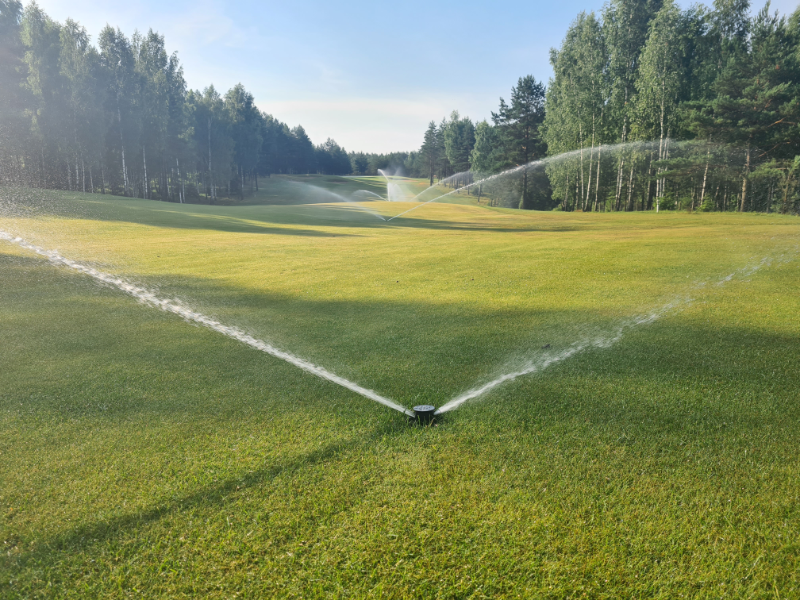
A championship-quality golf course operating in one of the world's most water-scarce environments. Optimal irrigation is essential to maintain turf quality.
Our objective was to map moisture variation across a sample of the course and compare against available satellite NDMI data
Comparison data referenced from Copernicus Data Space Ecosystem, Sentinel-2 L1C
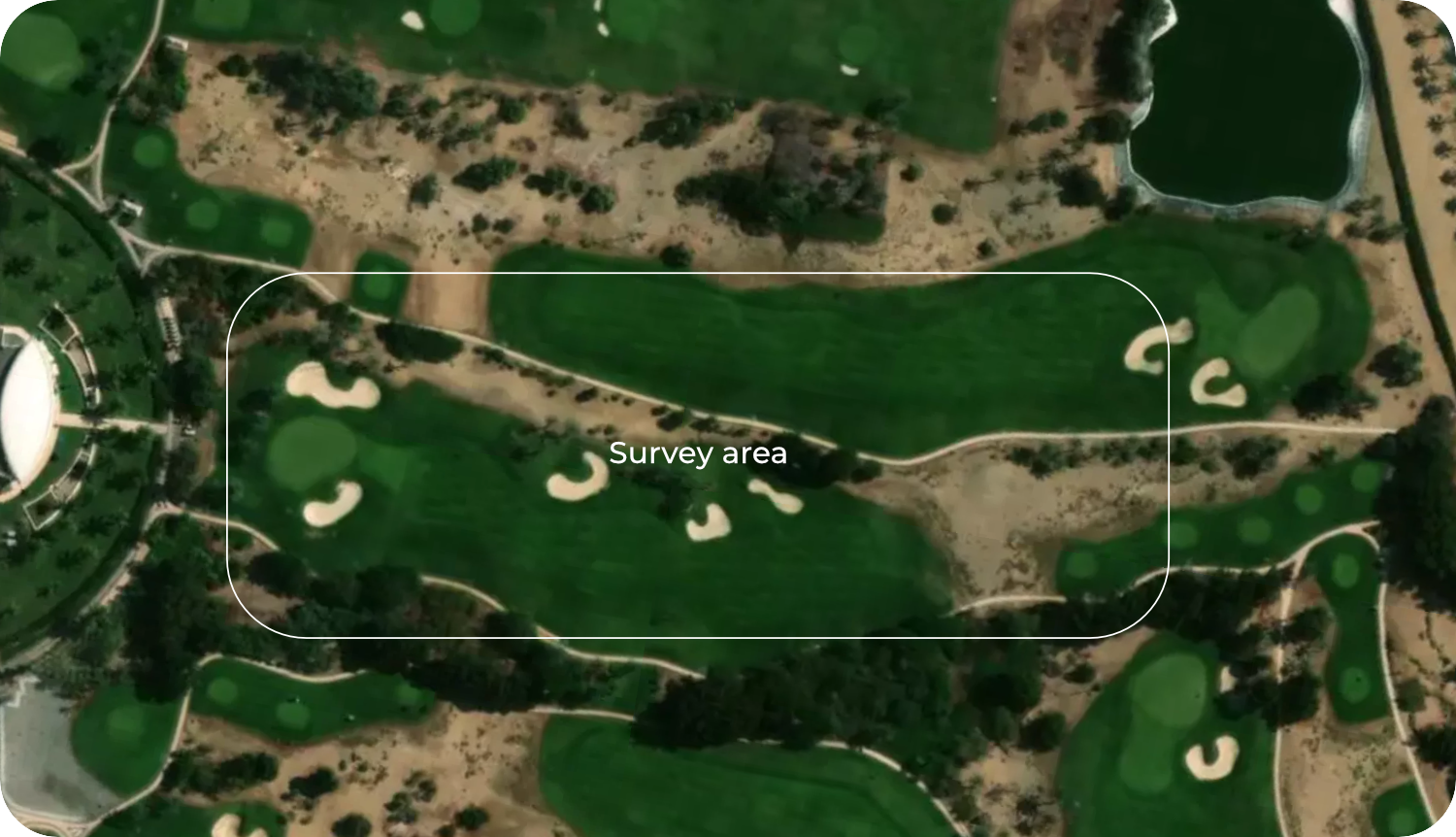
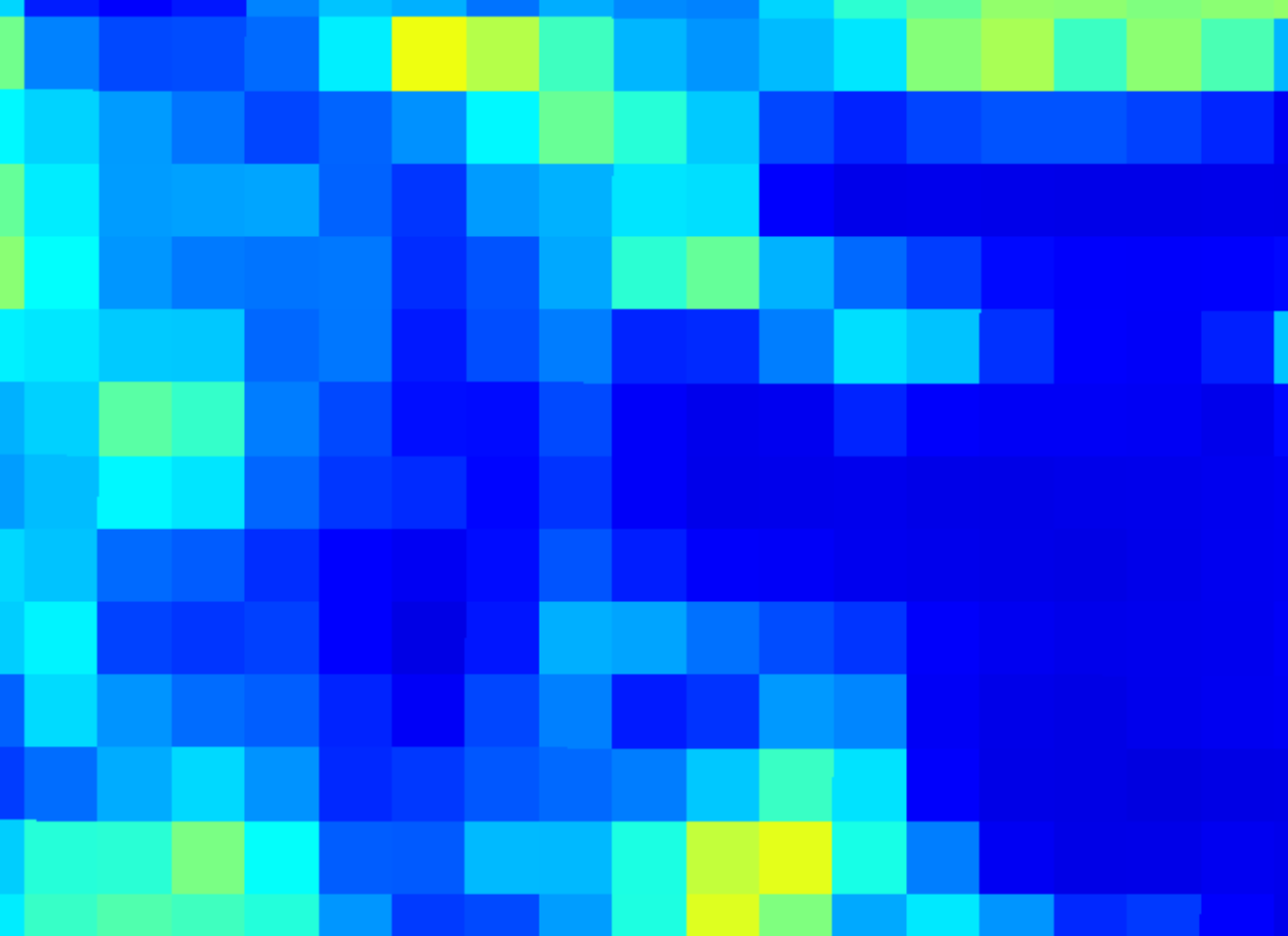
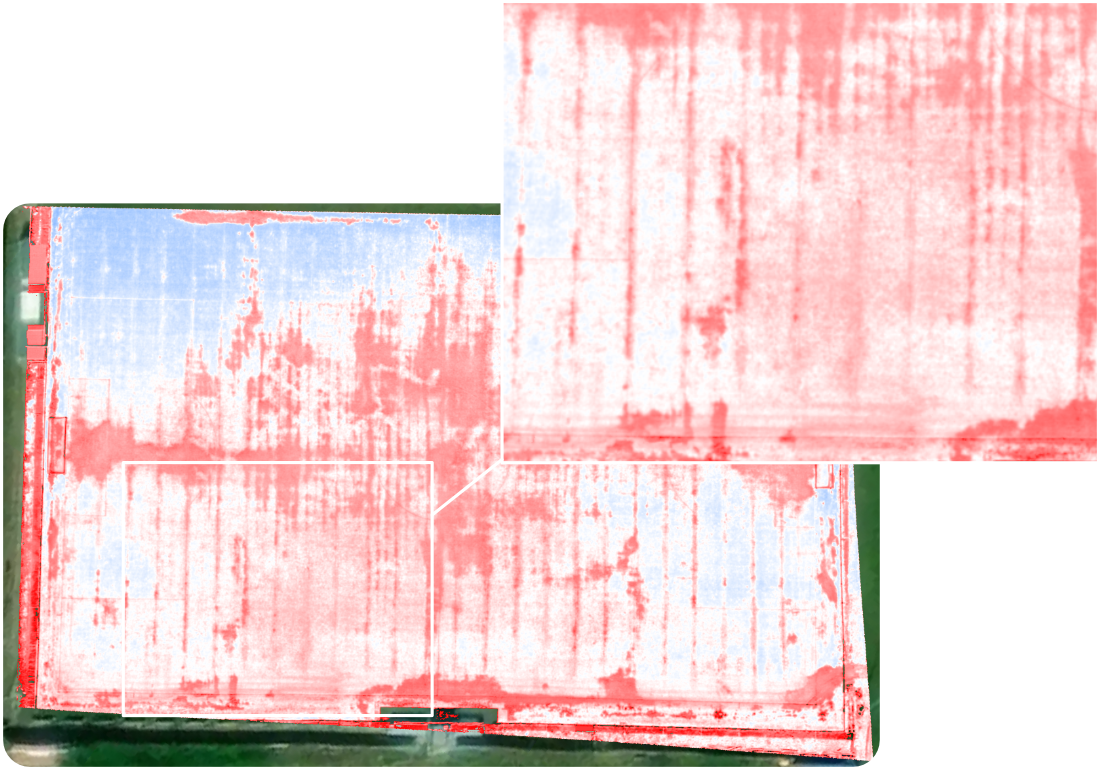
NDMI from Sentinel-2 provides a consistent measure of moisture across vegetation and soil at 20 metre resolution. At this scale, it is useful for identifying broad trends, but it is less effective in managed turf environments where variation occurs over much smaller distances. This is clear in the survey-area view: when zoomed in, the data is coarse, and local variation is averaged within each pixel. As a result, differences within fairways, irrigation coverage, and early-stage stress are not clearly visible.
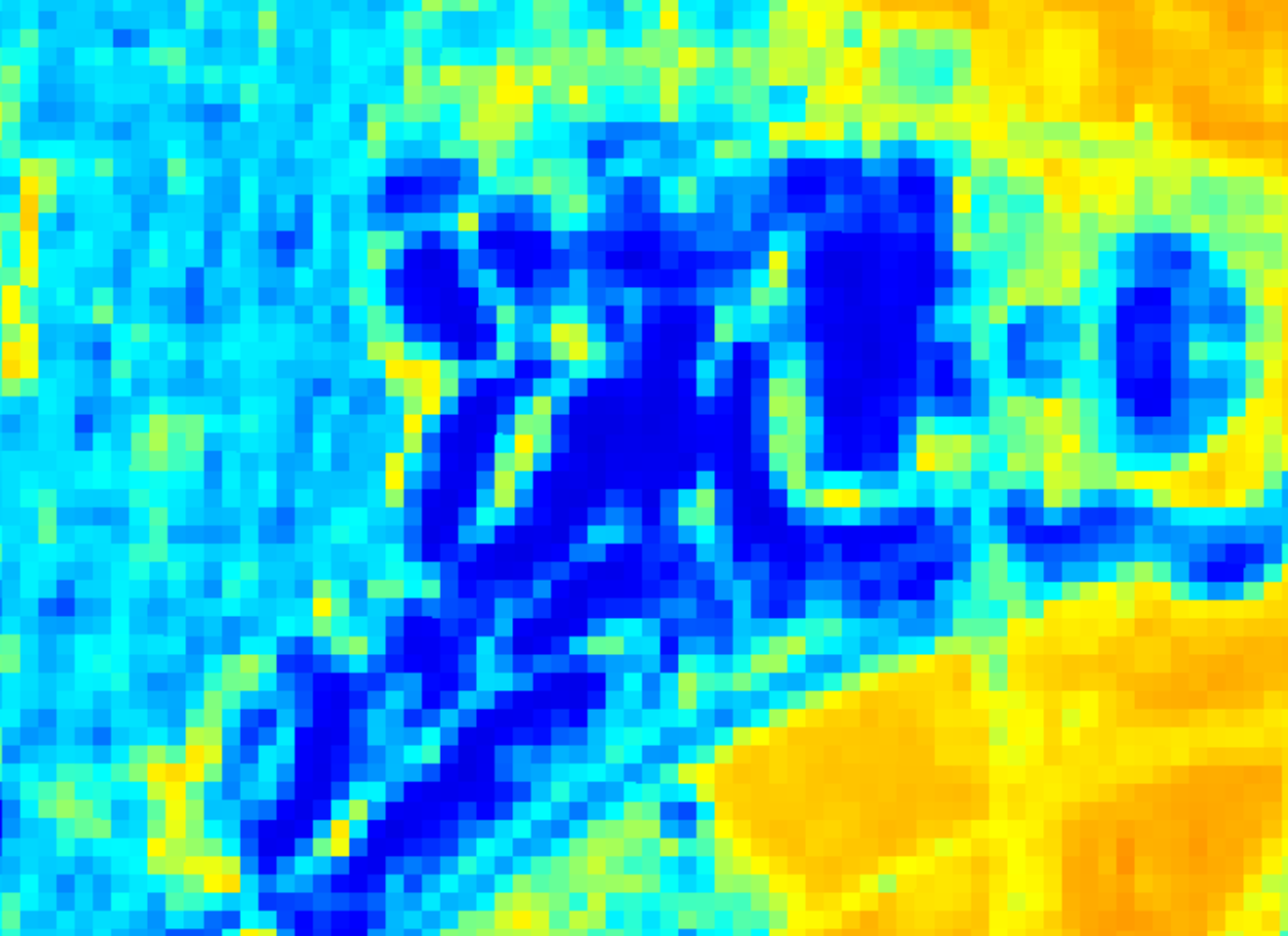
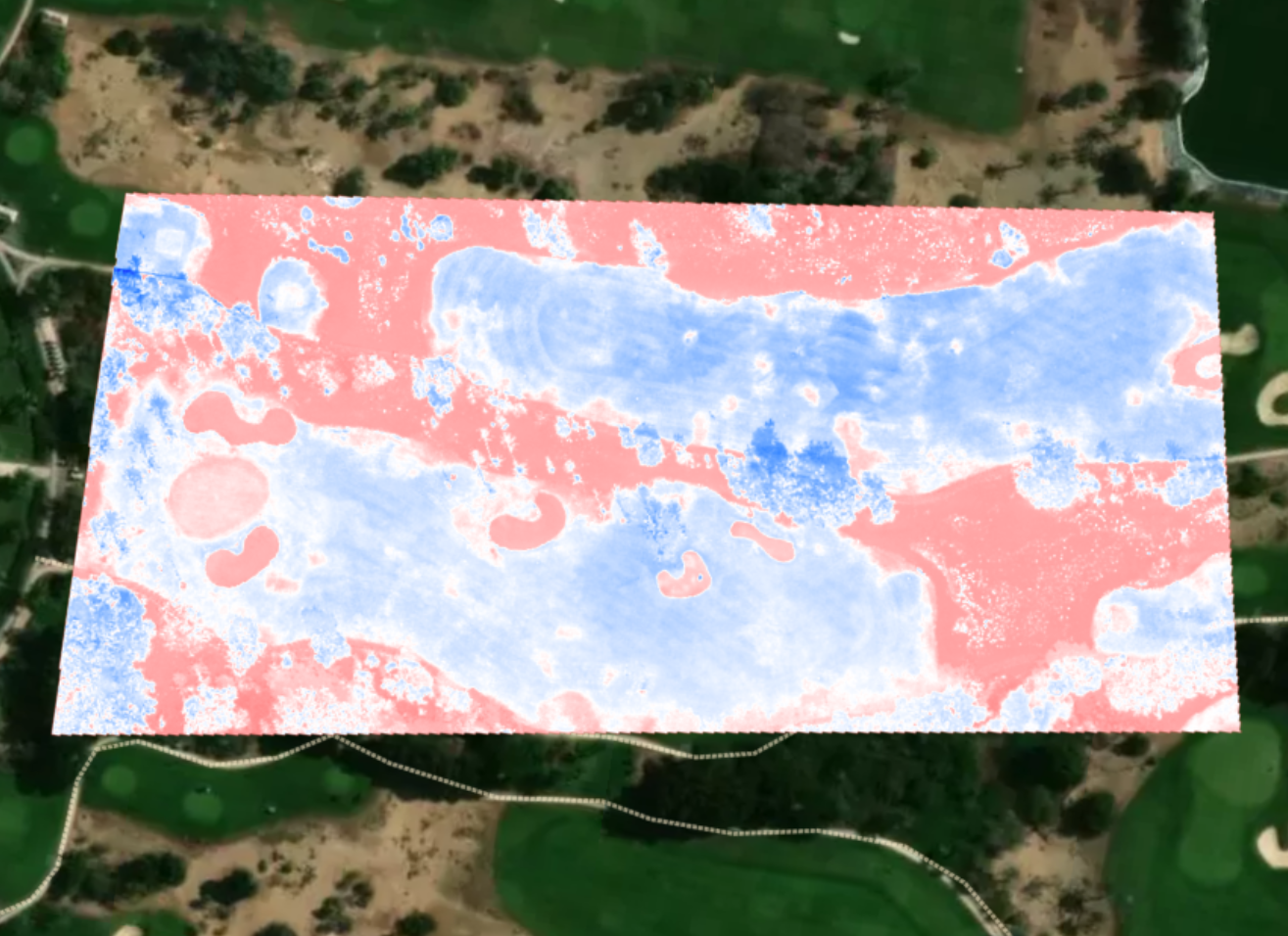
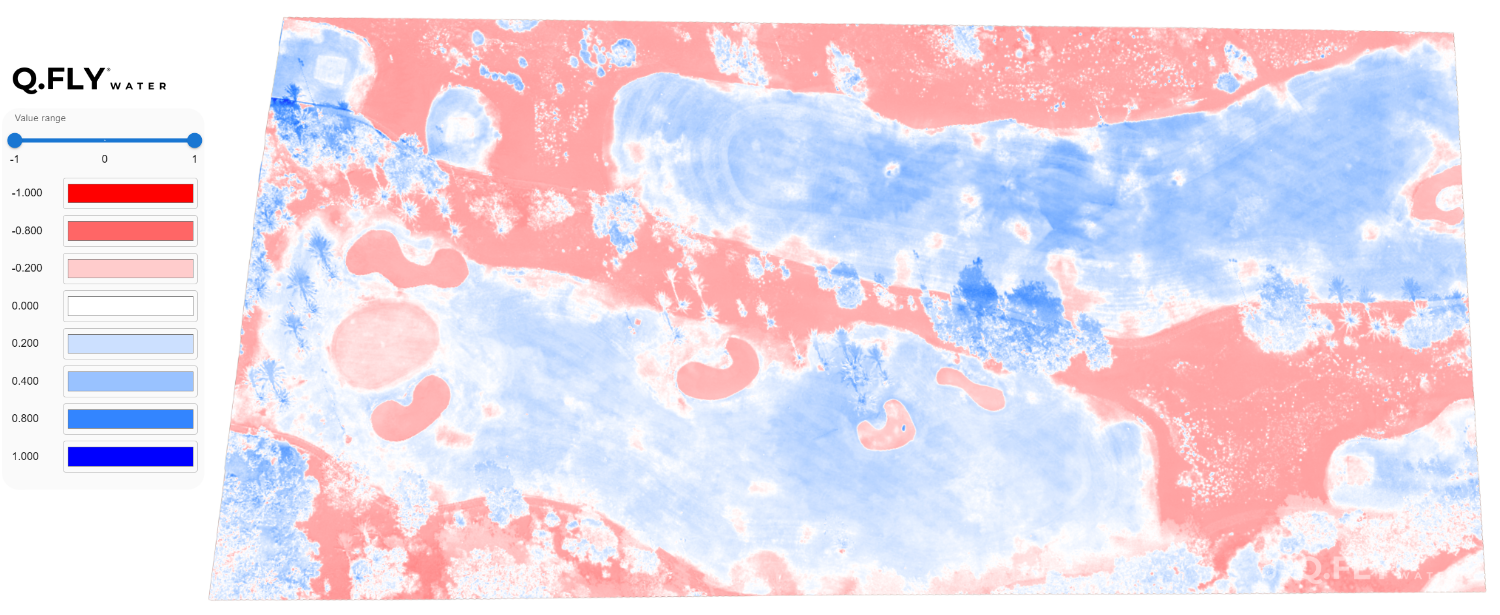
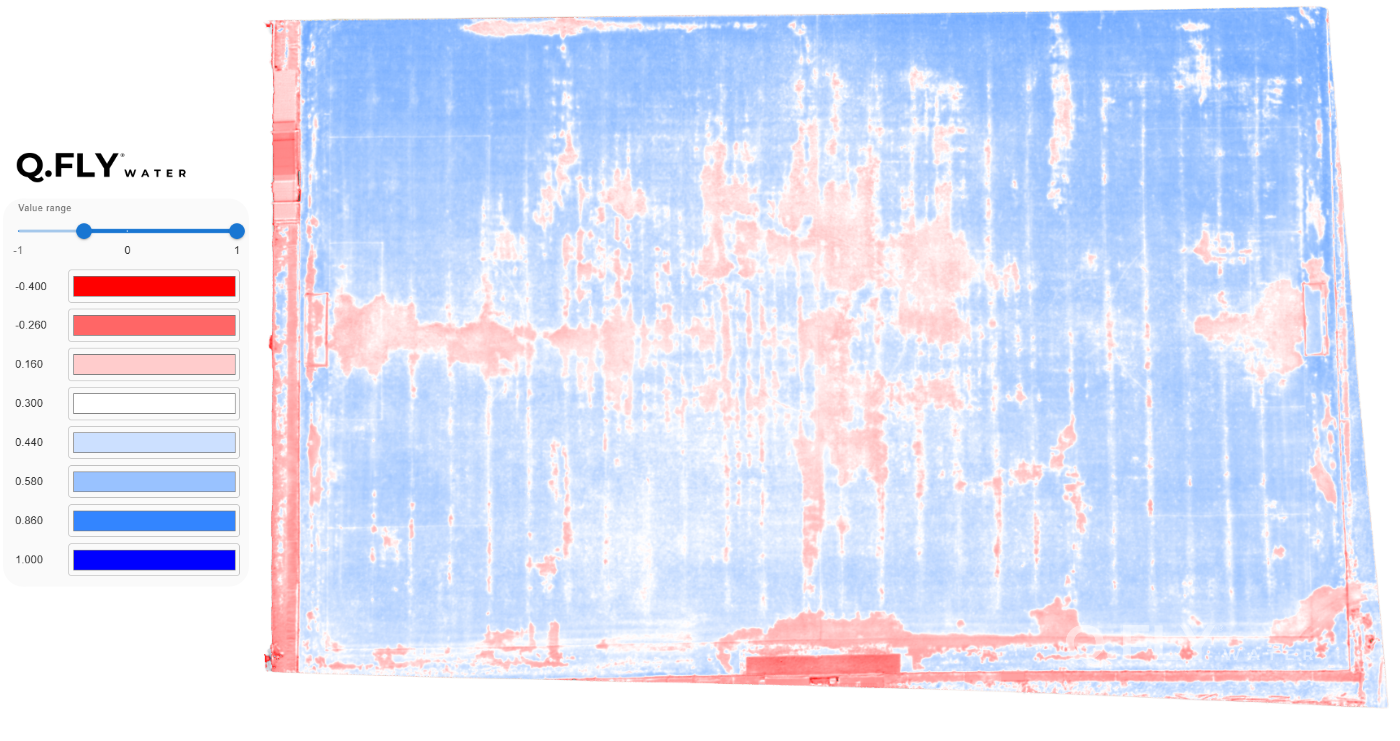
Centimetre-scale NDMI captured using Q.FLY Water provides a direct comparison of the same index at much higher resolution. At this level of detail, variation within individual turf features becomes visible, including irrigation patterns, localised dry zones, and fine-scale changes across the surface.
Sentinel 2 NDMI (full course)
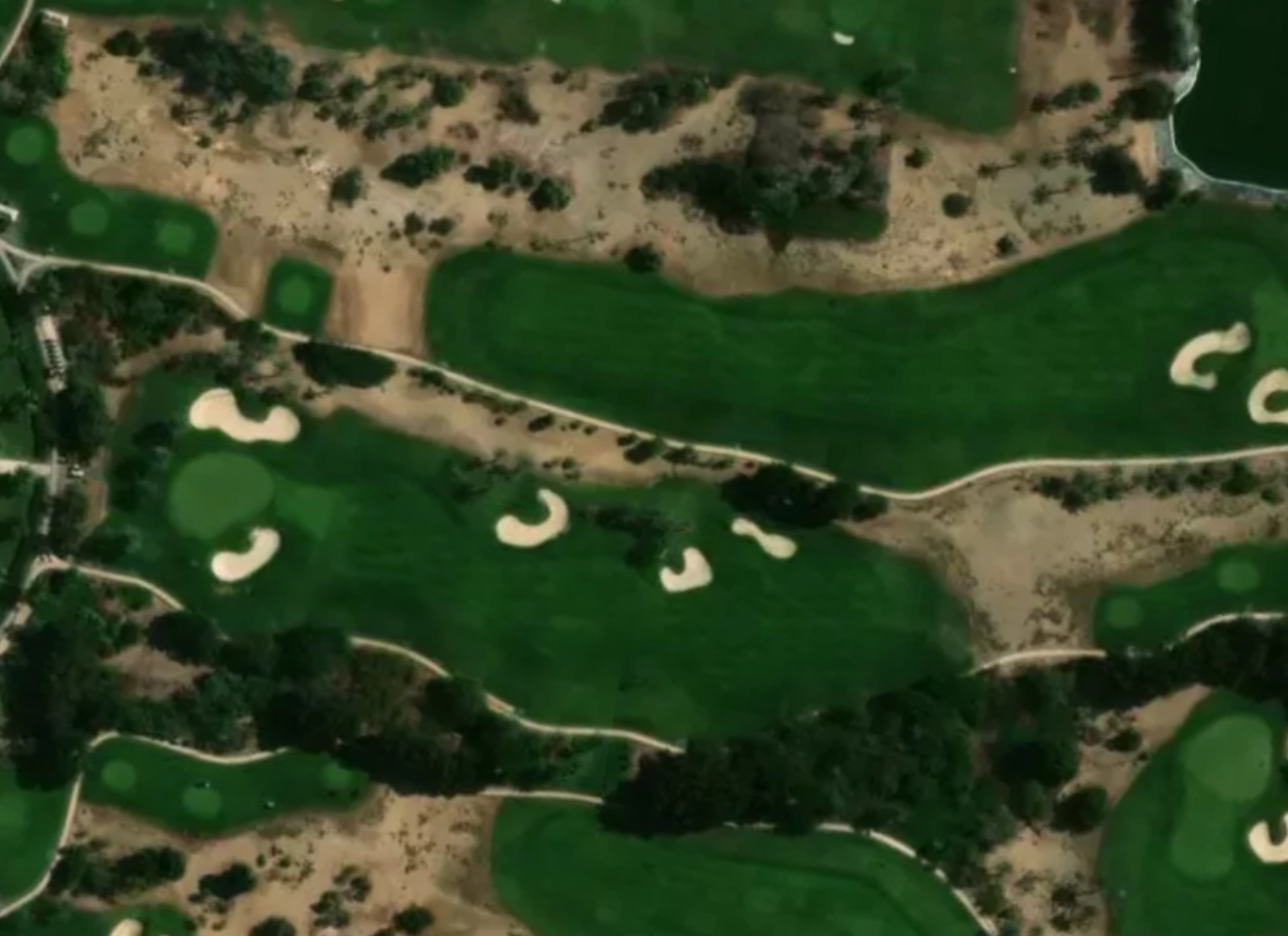
Satellite RGB of survey area
Sentinel 2 NDMI of survey area
Q.FLY Water NDMI of survey area
Red = low moisture content | Blue = high moisture content
Clear circular and patterned wet zones aligned with sprinkler systems.
Stress zones linked to bunker play, lay-up areas, and movement corridors.
Fine-scale moisture gradients across a single fairway, invisible in satellite data.
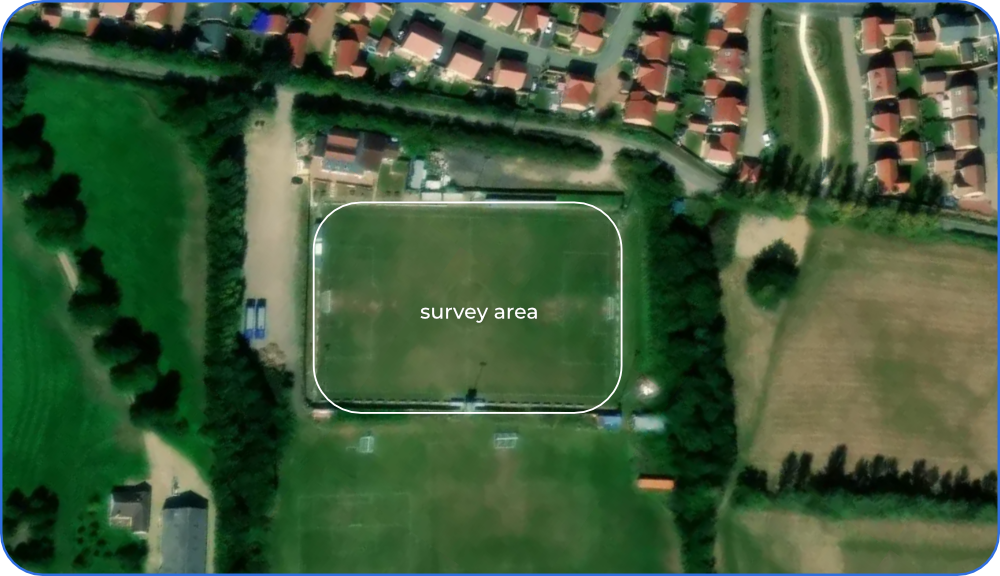
Low-tier football club experiencing poor pitch conditions. Our objective was to evaluate whether high-resolution NDMI can detect stress and wear patterns to guide maintenance.
Comparison data referenced from Copernicus Data Space Ecosystem, Sentinel-2 L1C
For smaller, highly managed turf environments such as football pitches, the application of satellite-derived NDMI is severely constrained by spatial resolution, which limits the usefulness of the technology for informing maintenance decisions.
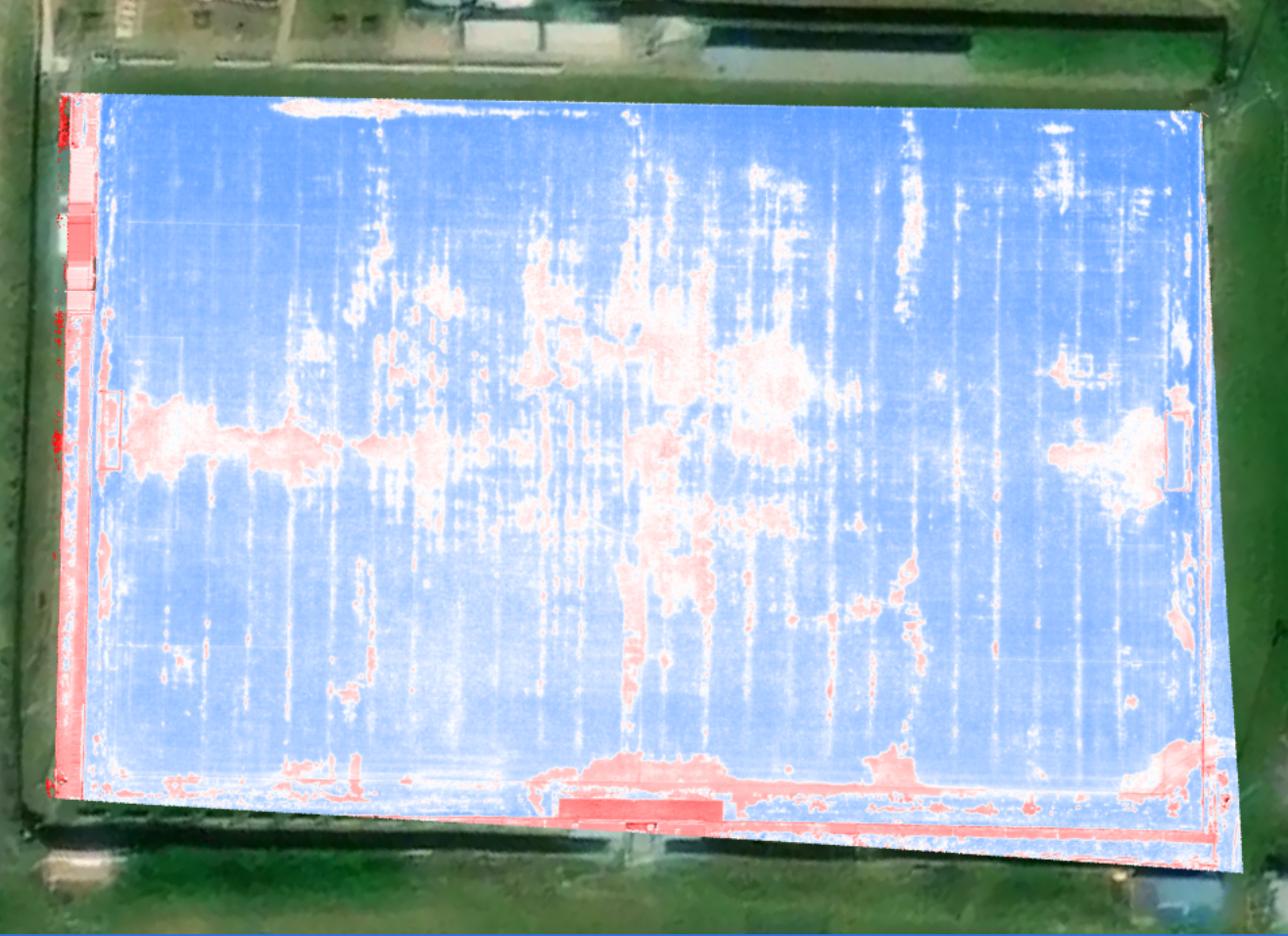
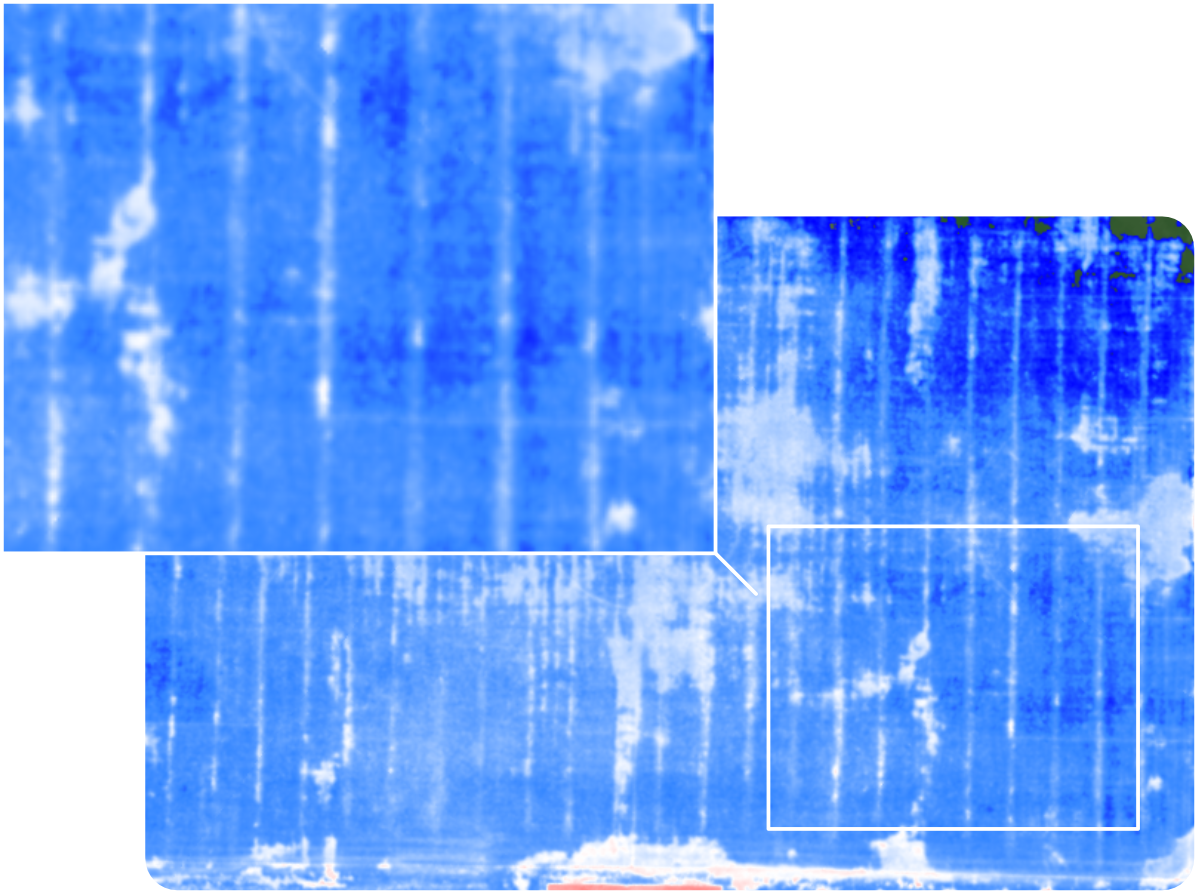
In this case, the available satellite NDMI data for the pitch appears as a single orange cell, with no visible internal variation. As a result, differences in surface condition across the pitch cannot be identified. By comparison, centimetre-scale NDMI captured using Q.FLY Water reveals variation across the full surface, including patterns of stress, wear, and uneven moisture distribution.
Sentinel 2 NDMI (Yellow square)
Q.FLY Water NDMI
Red = low moisture content | Blue = high moisture content
Surface thinning in high-traffic areas
reduced moisture uptake in worn zones
Underlying drainage structure
To isolate moisture stress across the pitch, the NDMI display range has been compressed further to show values from 0 to 1.000 only. At this scale, all visible colour represents a moisture deficit -white marks the threshold, with red indicating progressively acute stress. Areas that appear uniform in the standard view begin to show meaningful variation, revealing where surface condition is already diverging and where deterioration is likely without intervention.
The linear features visible in the NDMI data correspond to the pitch’s drainage system. These appear due to consistent differences in moisture behaviour along drainage lines, allowing subsurface structure to be inferred from surface data.
This provides additional context for interpreting surface condition, helping to distinguish between stress caused by drainage, irrigation, or usage patterns.
Targeted intervention, reduced waste, and clearer insights
Redirect water to dry zones and reduce over-irrigation.
Focus on specific areas of failure or stress.
Track consistency and change over time.
Identify issues before visible deterioration.
Replace guesswork with measurable moisture data.
Lower water use and operational spend.
Discover high-resolution water mapping that breaks free from orbit
Speak to our team